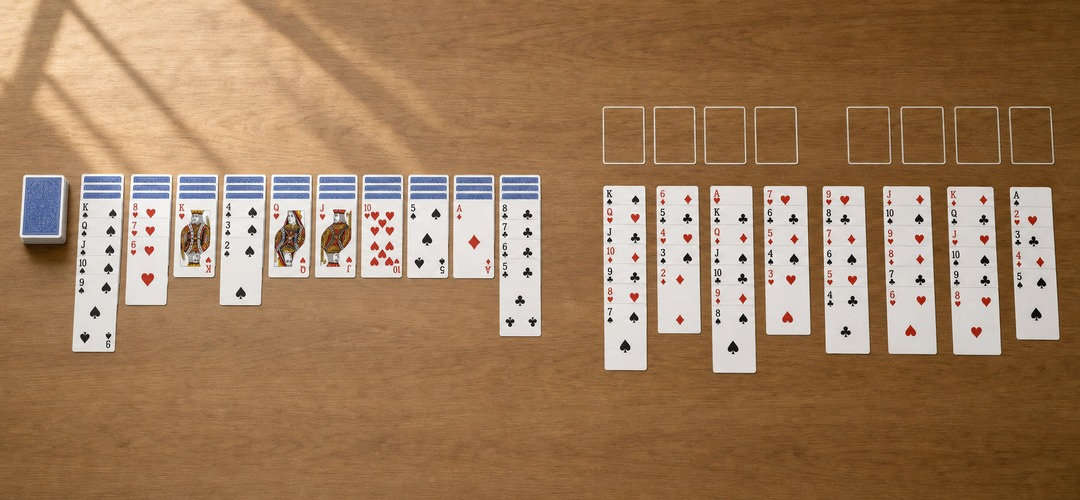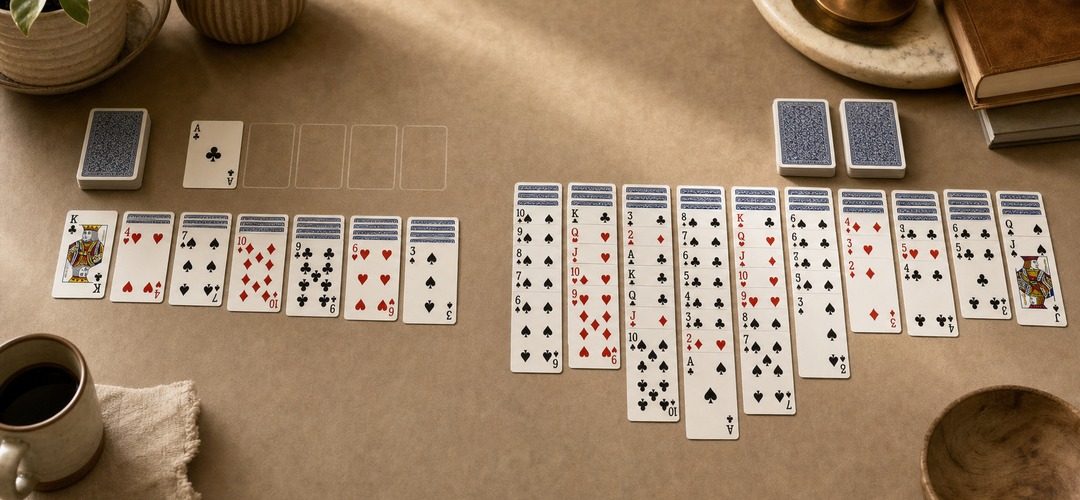
Solitaire and Spider Solitaire are related single-player card games, but they are not the same game. When most players say “Solitaire”, they usually mean classic Klondike Solitaire, the familiar one-deck game with seven tableau columns and four foundation piles. Spider Solitaire is a more complex two-deck game with ten tableau columns and eight completed sequences to build.
The biggest difference is how each game feels to play. Classic Solitaire is usually faster, easier to learn and more familiar for beginners. Spider Solitaire is more strategic, more demanding and often better for players who enjoy planning several moves ahead. If you want a quick classic card game, start with Solitaire. If you want a deeper challenge with more long-term decisions, play Spider Solitaire.
What is classic Solitaire?
Classic Solitaire, also known as Klondike Solitaire, is the version most people picture when they think of Solitaire. The game uses one standard deck of 52 cards. Cards are dealt into seven tableau columns, with only the top card of each column face up at the beginning. The goal is to move every card to the four foundation piles, one suit at a time, from Ace to King.
The basic rhythm is simple: reveal hidden cards, build descending sequences in alternating colors, move Aces to the foundations and use the stock pile when you need new playable cards. That makes classic Solitaire easy to understand, but not always easy to win. Good players still need to decide when to uncover cards, when to move cards to foundations and when to leave a sequence in place for later.
If you want a deeper rules walkthrough before comparing the two games, read the full guide on how to play Solitaire. It explains the setup, objective and basic moves in more detail.
What is Spider Solitaire?
Spider Solitaire is another single-player card game, but it plays very differently from classic Solitaire. It usually uses two decks, for a total of 104 cards, and the tableau has ten columns instead of seven. The goal is not to move cards to foundations one by one. Instead, you build complete descending sequences from King to Ace. Once a full same-suit sequence is completed, it is removed from the tableau.
Spider Solitaire also has different difficulty levels. One-suit Spider is the easiest version because every card belongs to the same suit. Two-suit Spider adds more complexity, and four-suit Spider is the most difficult because suit management becomes a major part of the strategy. This makes Spider Solitaire more flexible than classic Solitaire: the same game can feel relaxed, tactical or very challenging depending on the suit mode you choose.
If you are new to the game, start with the detailed guide on how to play Spider Solitaire. Then try the playable version of Spider Solitaire and begin with the one-suit mode before moving to harder variations.
Solitaire vs Spider Solitaire comparison
| Feature | Classic Solitaire | Spider Solitaire |
|---|---|---|
| Common name | Solitaire or Klondike Solitaire | Spider Solitaire |
| Decks | 1 deck | Usually 2 decks |
| Cards | 52 cards | 104 cards |
| Tableau | 7 columns | 10 columns |
| Main goal | Move all cards to 4 foundation piles | Build and remove 8 King-to-Ace sequences |
| Building rule | Descending order in alternating colors | Descending order, ideally in the same suit |
| Difficulty | Easier for beginners | Usually harder and more strategic |
| Typical game length | Shorter | Longer |
| Best for | Quick classic games | Deeper strategy games |
| Play now | Play Solitaire | Play Spider Solitaire |
Rules and setup differences
The setup is the first major difference between Solitaire and Spider Solitaire. Classic Solitaire starts with seven tableau columns. The first column has one card, the second has two cards, the third has three cards and so on until the seventh column. Only the top card in each column is face up. The remaining cards form the stock pile.
Spider Solitaire starts with ten tableau columns. The game uses more cards, more columns and a larger stock. Instead of drawing one card at a time from the stock, Spider usually deals a new row of cards across the tableau. This changes the pace of the game because each deal can create new opportunities, but it can also block columns that were previously close to being solved.
The way cards are completed is also different. In classic Solitaire, you send individual cards to foundation piles by suit, starting with Aces and building upward to Kings. In Spider Solitaire, you complete full descending runs from King to Ace inside the tableau. When a full sequence is complete, it disappears from the board.
These rule differences are why the games require different habits. In classic Solitaire, uncovering hidden cards is often the priority. In Spider Solitaire, creating empty columns and keeping same-suit sequences together are usually more important.
Which game is harder?
Spider Solitaire is usually harder than classic Solitaire. It uses more cards, has more tableau columns and requires more long-term planning. A mistake in classic Solitaire can sometimes be corrected quickly. In Spider Solitaire, a poor move can create mixed-suit blocks that are difficult to untangle several turns later.
That said, Spider Solitaire has a useful difficulty curve. One-suit Spider can be easier than many players expect, because suit conflicts disappear. Two-suit Spider is a good middle step. Four-suit Spider is much more demanding and is better suited to players who already understand the game’s rhythm.
Classic Solitaire is still not purely simple. Some deals are unwinnable, and many games require careful decisions around the stock pile, hidden cards and foundation timing. But if the question is “which game is generally harder?”, the answer is Spider Solitaire.
Which game is more strategic?
Both games reward strategy, but Spider Solitaire usually gives players more room to plan. Because Spider uses more cards and more columns, there are more possible move sequences to evaluate. Empty columns are especially valuable because they let you reorganize long runs and move stacked cards more freely.
Classic Solitaire has a different kind of strategy. It often depends on when to reveal hidden cards, whether to move cards to the foundation immediately and how to manage the stock pile. The game is partly about making the best available move with limited information.
Spider Solitaire feels more like a slow puzzle. Classic Solitaire feels more like a balance between tactics, card order and probability. If you enjoy planning several moves ahead, Spider Solitaire is likely to feel more rewarding.
Which game is better for beginners?
Classic Solitaire is the better starting point for most beginners. It has fewer cards, a more familiar layout and a clearer objective. New players can understand the core idea quickly: build sequences in the tableau, reveal hidden cards and move cards to the foundations.
After that, one-suit Spider Solitaire is a natural next step. It introduces the larger tableau and sequence-building style of Spider without the added difficulty of managing multiple suits. Once you can complete one-suit games consistently, two-suit and four-suit Spider become more interesting.
If you are completely new to Solitaire games, start with Solitaire and the how to play Solitaire guide. If you already know the basics and want a more strategic challenge, move on to Spider Solitaire and the how to play Spider Solitaire guide.
Which game should you play?
Choose classic Solitaire if you want a quick, familiar card game that you can play in short sessions. It is ideal when you want something simple to start, but still interesting enough to reward better decisions over time. It is also the better choice if you like the traditional Klondike layout and the satisfaction of building four foundation piles.
Choose Spider Solitaire if you want a deeper puzzle. It is better for players who enjoy planning ahead, managing space and building long sequences. It can also feel more satisfying when you win, because completing a difficult Spider game often requires patience and careful organization.
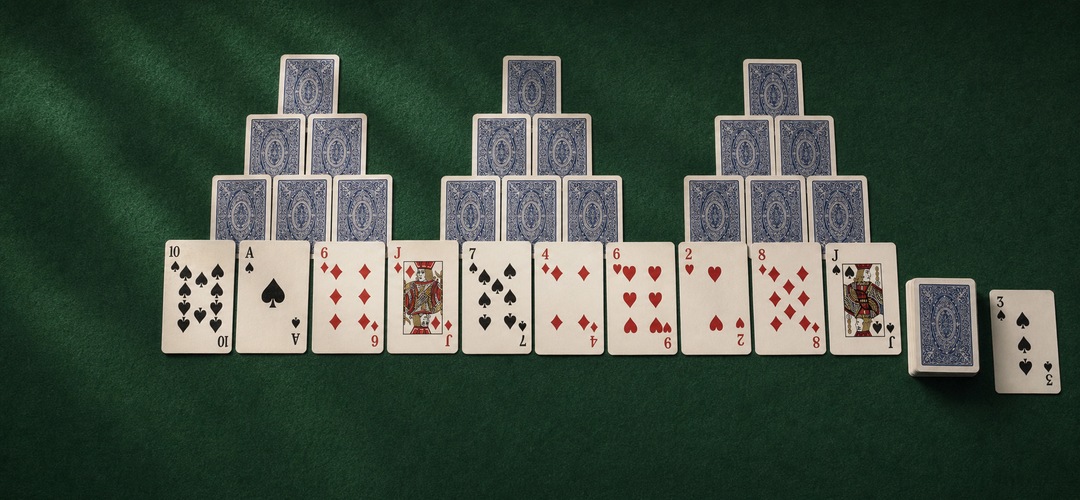
You do not need to choose only one. Many players use classic Solitaire for quick games and Spider Solitaire when they want a longer challenge. You can also explore other strategy-focused games such as FreeCell Solitaire, where most games can be solved with enough planning, or TriPeaks Solitaire, which has a faster and more casual rhythm.
Try both games on Solitaire365
The easiest way to understand the difference between Solitaire and Spider Solitaire is to play both. Start with Solitaire if you want the classic Klondike experience. Then try Spider Solitaire if you want more columns, more cards and more strategy.
If you prefer daily challenges, you can play Daily Solitaire or test yourself with Daily Spider Solitaire. You can also browse the full collection of Solitaire games to compare different variants and find the style that fits your mood.
Which game should you choose?
The main difference between Solitaire and Spider Solitaire is structure. Classic Solitaire usually means Klondike: one deck, seven tableau columns and four foundation piles. Spider Solitaire uses two decks, ten tableau columns and eight completed King-to-Ace sequences. Classic Solitaire is faster and more beginner-friendly. Spider Solitaire is deeper, longer and usually more strategic.
If you are new, play classic Solitaire first. If you already know the basics and want a bigger challenge, Spider Solitaire is the better next game.