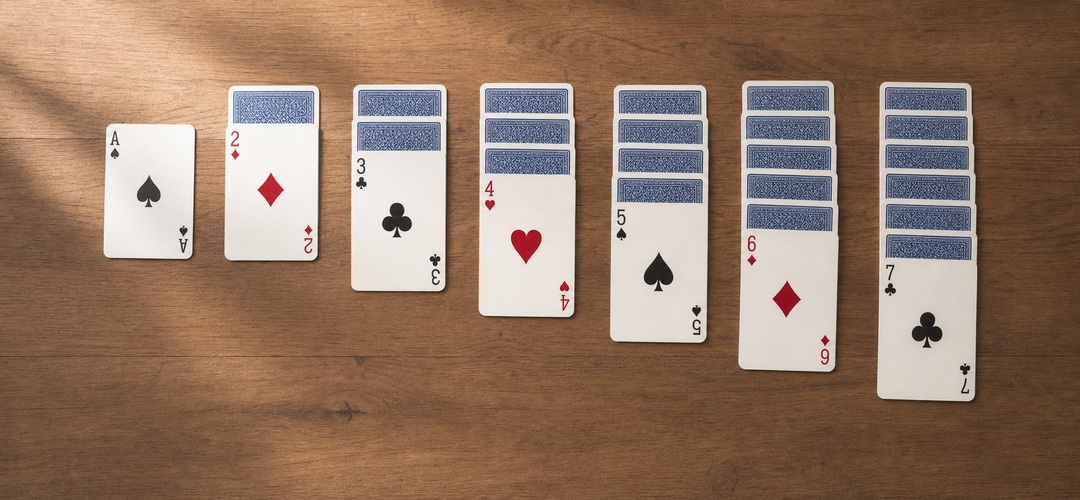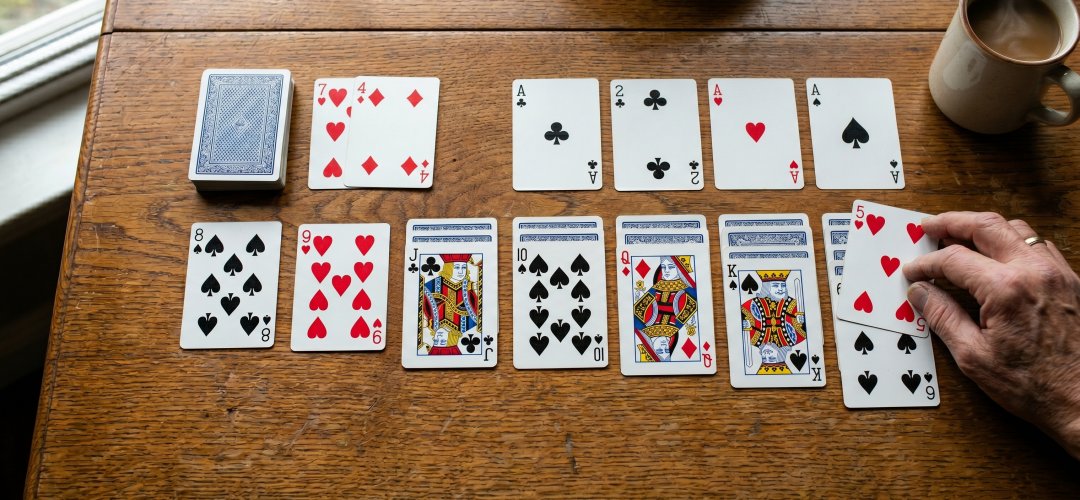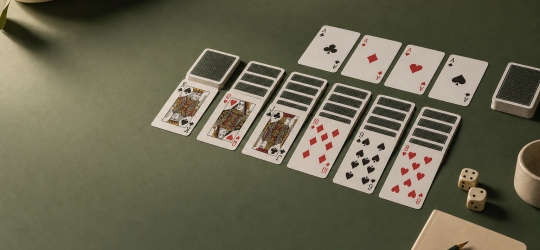
Solitaire is both luck and skill. Luck decides the deal, especially in games where many cards begin hidden. Skill decides how well you uncover cards, manage choices, build sequences and avoid blocking future moves. The balance changes depending on the type of Solitaire you play.
In classic Solitaire, also known as Klondike, luck has a big influence because you cannot control the order of the deck. But that does not mean the game is only luck. Good players make better decisions, avoid short-term traps and give themselves more chances to turn a difficult deal into a win.
Other variants lean more heavily toward skill. FreeCell, for example, gives you much more information from the start, which makes planning more important. Spider Solitaire adds another layer of strategy because you need to build sequences, manage empty columns and think carefully before dealing new cards.
Quick answer: Solitaire is both luck and skill
If you are asking “is Solitaire luck or skill?”, the simplest answer is: it depends on the variant, but most Solitaire games use both.
Luck affects the cards you receive, the order of the stock pile and the layout at the beginning of the game. Skill affects how you respond to that situation. You choose which cards to move, when to reveal hidden cards, when to use empty spaces and when to hold back instead of making the first available move.
That is why two players can get the same deal and have very different results. One player may block an important card too early. Another may wait, uncover more cards and create a better sequence. The cards are the same, but the decisions are different.
Why luck matters in Solitaire
Luck matters because Solitaire begins with a shuffled deck. You do not choose which cards appear face up, which cards stay hidden or which cards are buried in the stock pile. In some deals, the cards you need may be blocked behind other cards for a long time. In others, the right card appears at exactly the right moment.
This is especially true in classic Solitaire. Many cards begin face down, and the stock pile can determine whether you get access to the card you need. Even a strong player cannot control the shuffle.
Luck also affects whether a game is realistically winnable. Some deals are much easier than others. Some require very precise choices. Some may not give you enough useful options to finish the game, even if you play carefully.
That is part of what makes Solitaire appealing. Every deal feels different. You can use the same rules, the same strategy and the same game plan, but the cards still create a fresh puzzle each time.
Where skill makes the biggest difference
Skill matters because Solitaire is not just about moving any available card. It is about choosing the move that creates the best future position.
A beginner often plays the most obvious move immediately. A stronger player looks for the move that reveals a hidden card, opens a column, keeps a useful card available or avoids blocking a future sequence. That kind of decision-making can change the outcome of a game.
The most important Solitaire skills include:
- Revealing hidden cards as early as possible.
- Creating empty tableau spaces at the right time.
- Thinking ahead before moving cards to the foundations.
- Avoiding moves that trap important cards.
- Keeping multiple options open instead of committing too early.
- Recognizing when a move looks useful now but hurts later.
This is why Solitaire strategy matters. You cannot remove luck from the game, but you can improve how often you make the best available decision.
Luck vs skill by Solitaire variant
Different Solitaire games have different balances of luck and skill. Some depend heavily on the deal. Others reward planning, memory and long-term thinking.
| Solitaire variant | Luck level | Skill level | Why it matters |
|---|---|---|---|
| Solitaire | Medium to high | Medium | Hidden cards and stock order matter, but better move selection can improve your chances. |
| FreeCell | Low | High | Most cards are visible from the start, so planning and move order matter more than the deal. |
| Spider Solitaire | Medium | High | You need to build sequences, manage empty columns and control when new cards enter the game. |
| TriPeaks Solitaire | High | Medium | Card order has a big impact, but good timing and streak management still matter. |
| Pyramid Solitaire | High | Medium | The layout can limit your options, but pairing decisions can still make a difference. |
| Golf Solitaire | High | Medium | The game is quick and deal-dependent, but tactical choices affect how long your run continues. |
| Yukon Solitaire | Medium | High | Many cards are visible, but poor sequencing can block long runs and reduce your options. |
The more information you can see, the more skill usually matters. The more cards remain hidden or locked behind the draw pile, the more luck affects the game.
Is Klondike Solitaire more luck or skill?
Classic Solitaire, or Klondike, is usually more luck-based than games like FreeCell. That is because many cards begin face down, and the order of the stock pile can decide whether you get access to key cards.
But Klondike is not just luck. If several moves are available, choosing the wrong one can make a winnable deal much harder. Moving a card to the foundation too early can block a useful sequence. Filling an empty column with the wrong card can stop you from moving a King later. Ignoring hidden cards can leave important options buried.
Good Klondike strategy is about creating access. You want to reveal face-down cards, keep columns flexible and avoid moves that only look helpful in the short term. Luck gives you the puzzle. Skill helps you solve it.
Why FreeCell is more skill-based
FreeCell is one of the clearest examples of a skill-based Solitaire game. Unlike classic Solitaire, most cards are visible from the start. That means you can study the layout, plan sequences and decide how to use the free cells before making your first move.
Because you can see so much of the game, your decisions carry more weight. You need to manage empty cells carefully, avoid filling them too soon and create space for longer sequences. A careless move can still trap you, but a patient player has more control over the result.
This is why many players see FreeCell as a more strategic game. It rewards planning, patience and the ability to think several moves ahead. If you want a Solitaire variant where skill matters more than the luck of the draw, FreeCell is one of the best places to start.
How Spider Solitaire changes the balance
Spider Solitaire sits between luck and deep strategy. The deal still matters, but your decisions can have a major impact on how the game develops.
The main challenge in Spider Solitaire is sequence management. You need to arrange cards in descending order, create empty columns and complete full suited sequences. The more suits you play with, the harder the game becomes.
One-suit Spider is more forgiving because every sequence can work together. Two-suit Spider adds more planning. Four-suit Spider is much more demanding because you need to manage suit order carefully and avoid mixing cards in ways that block progress.
In Spider Solitaire, skill often means knowing when not to move. A move that creates a short sequence may look useful, but it can also close off a better option. Empty columns are especially powerful, so using them at the right moment is one of the biggest differences between casual and experienced players.
Can every Solitaire game be won?
Not every Solitaire game can be won. The answer depends on the variant, the deal and the rules being used.
Some Solitaire games are more controllable because more cards are visible. Others are more dependent on hidden cards, draw order or random layout. Even when a deal is technically winnable, a player may still lose if they make a poor move early in the game.
This is an important distinction. A winnable deal does not guarantee a win. It only means that there is a possible path to victory. Skill is what helps you find that path more often.
That is also why Solitaire remains interesting over time. You are not simply waiting for a lucky deal. You are learning how to recognize better moves, recover from difficult positions and understand when the game is asking for patience instead of speed.
How to improve your chances of winning
You cannot control the shuffle, but you can control how you play. Better Solitaire strategy gives you more chances to win, especially in games where planning matters.
Start by prioritizing hidden cards. In classic Solitaire, revealing face-down cards usually creates more options than simply moving cards between visible columns. More visible cards means more possible moves.
Be careful with foundation moves. It can feel natural to move cards to the foundations as soon as possible, but sometimes those cards are still useful in the tableau. If a card can help you build or move a sequence, it may be better to wait.
Use empty spaces wisely. In Klondike, an empty column is valuable because it can hold a King. In FreeCell, empty tableau columns and free cells give you more room to rearrange sequences. In Spider Solitaire, an empty column can completely change the game because it lets you reorganize long stacks.
Think before dealing new cards. In games like Spider Solitaire, adding new cards too early can bury useful sequences and make the board harder to control. Before dealing, check whether you can create more order with the cards already on the table.
Finally, practice different variants. TriPeaks Solitaire, Pyramid Solitaire, Golf Solitaire and Yukon Solitaire all teach different skills. Some improve quick decision-making. Others reward planning and patience. The more variants you play, the better you understand the balance between luck and skill.
Which Solitaire game should you play?
If you want the classic experience, play Solitaire. It gives you the familiar mix of luck, hidden information and strategic decisions that most people associate with the game.
If you want a more skill-based challenge, try FreeCell. Because the cards are visible, the game rewards planning more directly.
If you want deeper sequencing and more long-term strategy, try Spider Solitaire. Start with one suit if you are new to the game, then move to two suits or four suits when you want a harder challenge.
If you prefer faster games, try TriPeaks Solitaire, Pyramid Solitaire or Golf Solitaire. These games are more affected by card order, but they still reward smart timing and careful choices.
You can also browse the full collection of Solitaire games to find the right balance of luck, skill and pace for your mood.
Final takeaway
Solitaire is not just luck. The shuffle matters, the deal matters and some games are harder to control than others. But your decisions still shape the result.
In classic Solitaire, luck has a bigger role because many cards are hidden. In FreeCell, skill matters more because you can see the layout and plan ahead. In Spider Solitaire, the game becomes a deeper test of sequencing, patience and board control.
The best answer is simple: Solitaire is a game of luck and skill. Luck gives you the cards. Skill helps you make the most of them.